
How to Improve Brewery Profitability
Breweries enjoyed massive growth over the past decade, but several changes, from consumer preferences to tariffs, pose significant risks to profitability. Brewery operating costs are rising even as consumers drink less, squeezing revenue and profit margins.
We put together a breakdown of a brewery’s average costs, plus ways to lower operating costs to protect profits while maintaining exceptional quality standards.
A Breakdown of Brewery Costs
The cost to open a brewery varies based on several factors, with most microbreweries investing $250,000 to $600,000 to get started. These early capital investments are the foundational components of any brewery and cover:
Brewery equipment costs (acquisition, installation)
Real estate (own or lease)
Build-out
Licensing
Inventory
Marketing
Brewery start-ups also need working capital for the first year or so, with most short-term profits going directly into the business or servicing debt payments.
There are additional costs for breweries opening a taproom and food service in their first year, plus staffing and training expenses.
Ongoing Brewery Operational Costs
As organizations transition from start-up to established business, operational costs determine profitability and growth trajectory. Protecting profits is a constant effort to identify cost savings while supporting revenue growth, with cost reductions often directed at minimizing fixed costs and accounting for variable - and often unpredictable - costs.
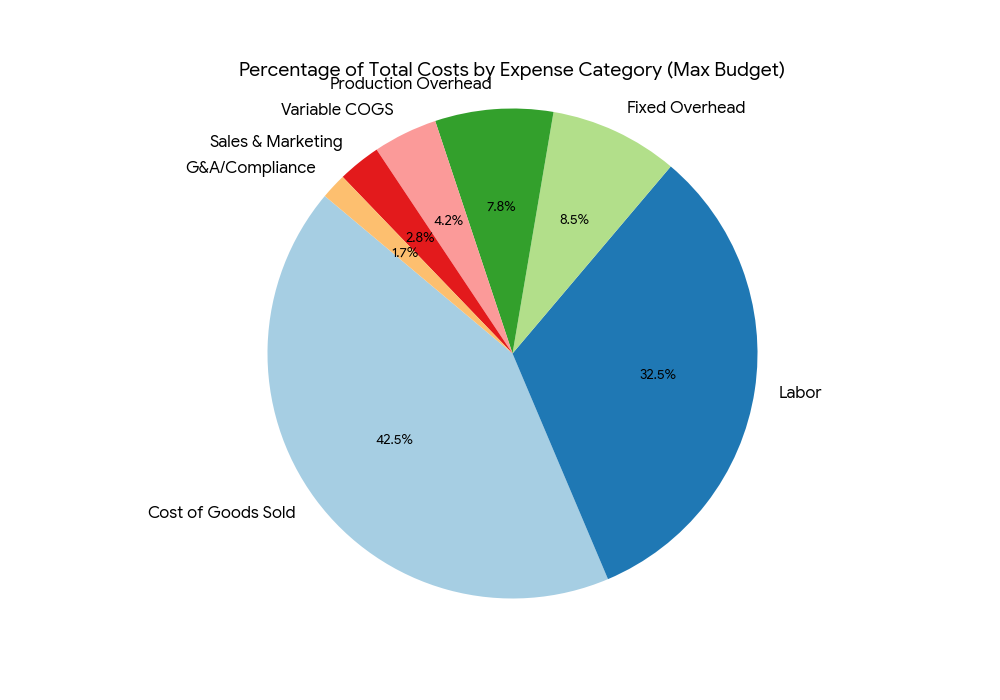
We based the monthly operating expenses for a small brewery on industry averages, with a maximum monthly total of $70,671, assuming the upper end of variable costs; plan for the worst, hope for the best.
Brewery Cost Breakdown
Where Does Energy Fit In?
Utilities categories are production overhead and account for roughly $1,500 to $3,000 of the category’s $5,500 costs. Additional production overhead costs include parts and repairs, and, depending on accounting practices, depreciation.
How Profitable Are Breweries?
The average brewery profit margin varies with the business's age and scale, location, and many other factors. Breweries with well-run taprooms have a higher average gross margin (often 60% or more), with wholesale margins typically between 20 and 30%. While the gross margin on the beer itself can be as high as 92%, wholesale prices, increased packaging costs, and other factors significantly reduce actual profits.
Read More: Craft Brewery Industry Growth
How to Improve Brewery Profitability
Especially in Michigan, where the number of craft breweries declined in 2025, the ongoing tariffs on aluminum and increased labor costs have made wholesale-only breweries make tough decisions. There are ways to offset these policy changes and unlock trapped capital; here are a few:
1. Optimize production - Streamlining production and lowering energy costs is an important part of any brewery’s growth trajectory. Keep inventory levels to a minimum by working with a reliable ingredients supplier, and invest in energy-efficient equipment and systems.
Energy costs account for 3-8% of production costs, and every kilowatt hour wasted hurts your bottom line.
2. Increase average spend. Introduce merchandise, larger volume sales (think growlers), tours, and experience-based revenue streams, such as brewing classes. Taprooms offer significant revenue gains from high-margin food (usually 3x the cost of ingredients).
3. Don’t guess - Invest in - and utilize - brewery management software to improve efficiency and identify ways to increase profits.
4. Marketing matters - Balance marketing efforts to attract likely customers and support your distribution/wholesale. These are different marketing channels with unique audiences, so diversify marketing efforts to reach both.
Keep Growing with Keen Technical Solutions
We’ve helped Michigan breweries lower energy costs and better adapt to changing market environments. Our experienced energy consultants understand the industry’s unique needs and challenges, enabling us to provide superior energy solutions. Learn more about our work and schedule your in-depth energy audit; contact a Keen representative today.