
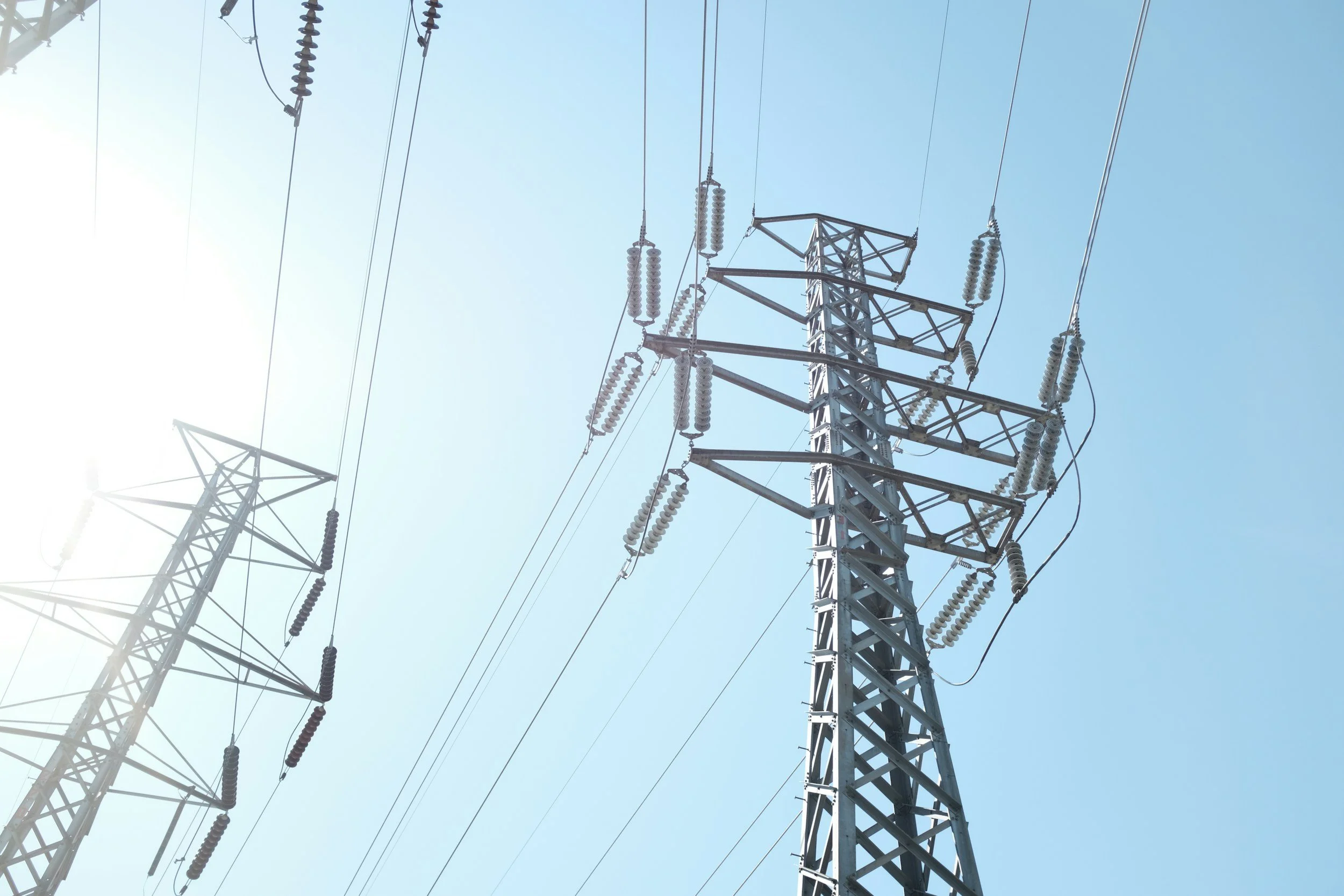
Moving electricity from a power plant to your facility isn’t quite as easy as flipping a switch. It’s a testament to the efficiency of modern utility systems that energy-intensive industrial and manufacturing operations rarely have to worry about having reliable power. The entire process relies on converting AC to DC, and vice versa, to power equipment and keep operations running.
The Difference Between Alternating Current and Direct Current
Industrial and manufacturing equipment uses both AC and DC electricity depending on the equipment and application. These two types of electric current, or electrical load, have different pros and cons worth understanding.
Alternating Current (AC)
Alternating current reverses direction periodically in a wave-like pattern, usually every 60 seconds or so. Alternating current is easy to step up to higher voltages or step down to safe levels with transformers. Power plants generate and deliver AC through the grid.
AC in manufacturing and industrial applications: Large motors, pumps, fans, heating and welding equipment, and most commercial HVAC systems.
Direct Current (DC)
Direct current flows in a constant direction with a fixed polarity. This makes it ideal for most electricity storage applications and delivers a consistent voltage that protects electronics. DC is often converted at the transformer level or on-site.
AC in manufacturing and industrial applications: LED lights, solar panels, sensors, computers, and servers.
Read More: Electrical Load in Electricity
How AC and DC Work
Power plants generate AC electricity, which is then delivered through high-voltage power lines. Just before it reaches your facility, rectifiers convert the AC to DC. Solar panels at grid-scale and commercial scale generate DC power. These systems use an inverter to transform it into AC before it can be used in many electrical applications.
Your facility likely relies on both AC and DC to run. AC is the heavy muscle, powering heavy systems, while DC powers the brains - your sensors, computers, and automation systems.
How to Convert AC to DC
Converting AC to DC is a four-step process. Also known as rectification, the conversion process requires a transformer, diodes, a capacitor, and a voltage regulator.
First, a transformer lowers high-voltage AC (often 120 Volt or 230 Volt) to a lower AC voltage level.
Next, the AC passes through diodes, semiconductor components that allow electricity to flow in only one direction.
Electricity then flows through a large electrolytic capacitor. The capacitor charges at the peak of each voltage pulse and discharges at each trough. This flattens the electrical waves into a single-direction, steady DC voltage.
Finally, a voltage regulator removes tiny fluctuations to deliver reliable DC for sensors and most sensitive electronics.
Knowing Makes a Difference
Understanding your facility's electrical systems and components is crucial for making informed decisions about repairs, replacements, and upgrades. Knowing the details of electrical processes improves efficiency and safety and protects your organization’s long-term growth. Learn more by contacting Keen’s experienced energy consultants and taking real ownership of your facility’s systems. Get in touch today!